Why Are They Called “Glee Clubs”?
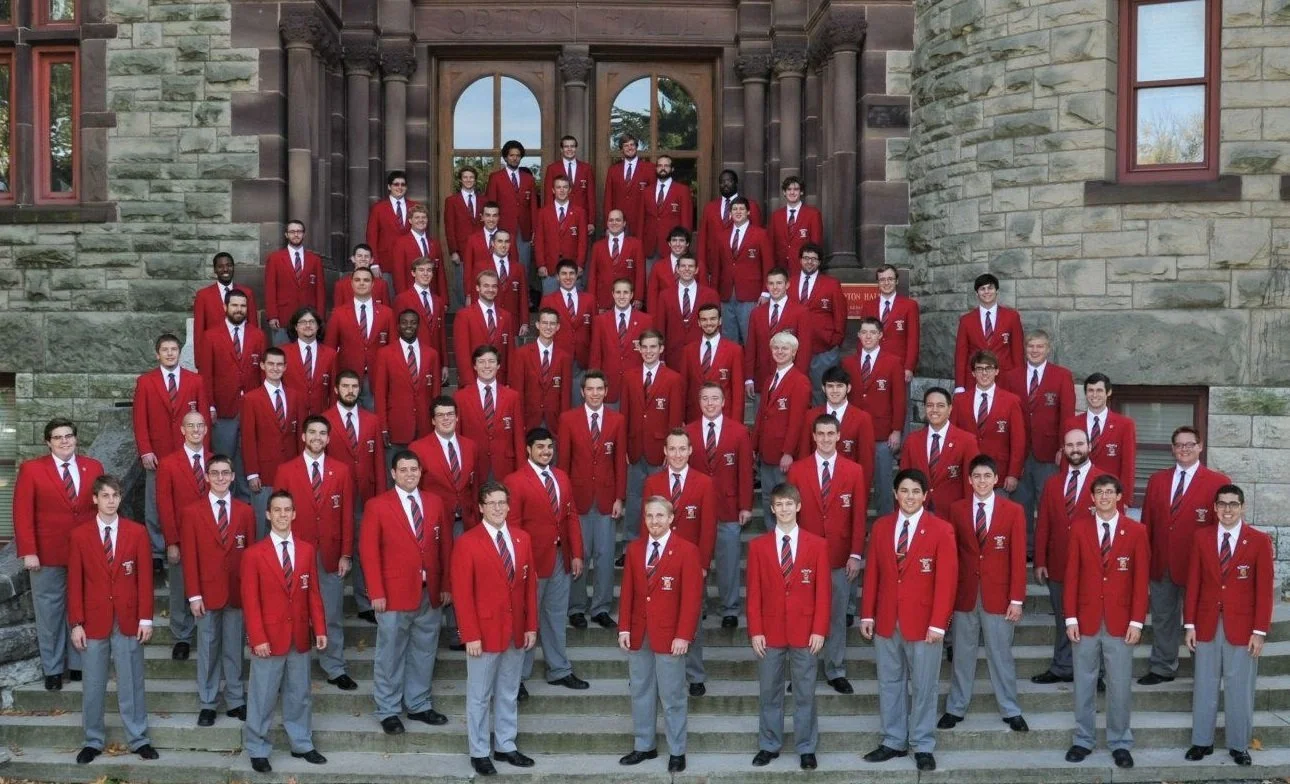
Millions of people watched the television show “Glee,” which ran from 2009 to 2015. Many may have wondered where the term “glee club” comes from.
“Glee” is not an unfamiliar word in normal usage, where it means high-spirited joy or delight. When Rudolf the Red-Nosed Reindeer was recognized as a hero, the other reindeer “shouted out with glee.” Athletes pouring Gatorade over a coach or a winning player might be described as gleeful.
Centuries ago, glee was the name of a particular kind of choral song. A glee was a song in three or more parts, usually for male voices and usually unaccompanied. Singing glees became a popular form of entertainment in England in the late 1700s and early 1800s. They were frequently sung informally in taverns.
The first organization using glee in its name was the Glee Club, founded in London in 1787. Samuel Webbe, a prolific composer of glees, wrote “Glorious Apollo” as the group’s theme song. “Blest Pair of Sirens” (at 7:18) is another example, this one for mixed voices. (Its composer, John Stafford Smith, also wrote the music that was later used for “The Star-Spangled Banner.”) William Paxton wrote the glee “Breathe Soft Ye Winds.” Glees grew out of a renewed interest in madrigals from the 16th and 17th centuries.
In the United States, glee club is usually associated with men’s collegiate singing groups. The first were founded at Harvard (1858), Michigan (1859), and Yale (1861). They were organized by students, like many later glee clubs at other colleges. (In many cases, glee clubs are the oldest student organization on campus.) The clubs drew students from many fields of study. Most glee clubs now are directed by faculty members, though there is often still a strong element of student leadership. Glee clubs can also be all women or mixed men and women. They perform a wide variety of music, rarely if ever featuring a glee song that inspired the group’s name.
Ironically, the television show that brought wide attention to the term “glee club” was about a show choir, not a glee club.
(Picture: Ohio State Men’s Glee Club, 2012)