Music with the Masters: Jester Hairston
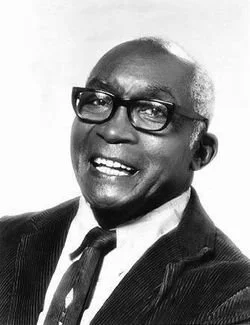
Jester Hairston (1901–2000) was a distinguished performer, actor, arranger and conductor. He received his bachelor’s degree at Tufts University, where he was one of the first African-American students admitted to music studies. Later, his advanced training in theory at the Juilliard School bolstered his strengths in composition and arranging for choirs.
Hairston was hired by the federal Depression-era Works Progress Administration to teach in the Harlem schools. He became assistant conductor for the Hall Johnson Choir, where he developed a keen interest in spirituals. In 1935, when the choir went to California to record movie soundtracks and radio shows, Hairston met film composer Dimitri Tiomkin. Tiomkin hired Hairston to arrange his movie scores. This led to his extended career, contributing music to 40 movies over the next decades, including “Guns of Navarone,” “Gunfight at OK Corral,” and “Carmen Jones.” Hairston himself also appeared on screen in numerous movies and even was a main character in the television show “Amen” in 1986–1991.
Most importantly, Hairston was a prolific composer and respected choral director. His most famous composition is “Amen,” which many mistakenly believe is a traditional spiritual. Hairston sang this song while Sidney Poitier lip-synched in the film “Lilies of the Field.” He composed or arranged over 300 choral spirituals. Popular pieces include “Elijah,” “Great Getting’ Up Morning,” and the calypso “Mary's Little Boy Child.” Hairston also was an engaging solo artist. In 1978, I saw him perform his Christmas calypso music live onstage, where he captivated the audience with his keen comedic sense of timing and portrayal as soloist. He was truly “one of a kind!”
Hairston toured many continents as a musical ambassador, sponsored by the US State Department. He also broke down racial barriers in the United States. For instance, be he was invited to guest-conduct the Mormon Tabernacle Choir, the first African-American to do so.